The short answer
The Domain Name System (DNS) is the internet's naming system. It helps your device turn a name such as example.com into the IP address it needs to contact the right server. Without DNS, people would have to remember numerical addresses for most websites and services.
DNS is not the website connection itself. It is usually an early lookup that tells an app where to connect. Your browser then uses another protocol, commonly HTTPS, to request the page.
What happens when you open a website?
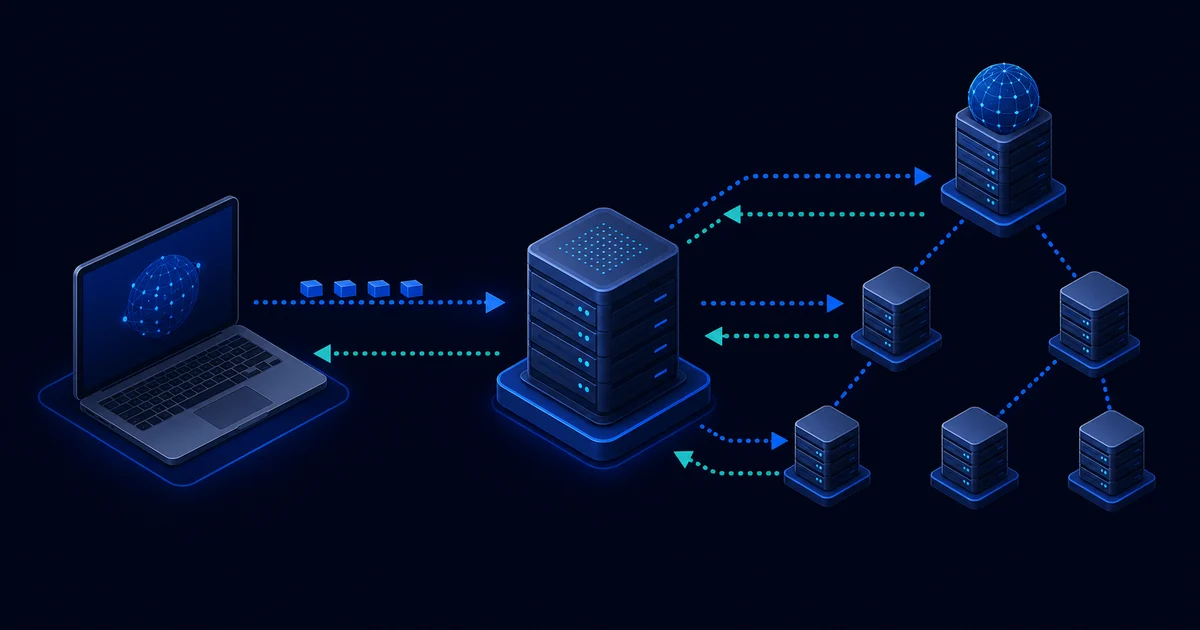
Your device first asks a small local component called a stub resolver to find an answer. The stub resolver may use an answer already stored on the device. If it does not have one, it normally sends the request to a recursive resolver operated by your internet provider, network administrator, or a DNS service you chose.
The recursive resolver checks its cache too. When it needs fresh information, it follows the DNS hierarchy: it can ask a root server which servers know about a top-level domain such as .com, ask those servers which authoritative servers handle a particular domain, and then ask an authoritative name server for the requested record. It returns the result to your device and keeps it for a limited time.
That is a simplified view, but it explains why a name can work even though the server behind it changes. The domain owner updates the authoritative DNS data; resolvers gradually refresh their cached answers.
DNS records carry different kinds of answers
DNS is a distributed database, not just a phone book for websites. A record describes a piece of information about a domain. Common examples include:
- A records map a name to an IPv4 address.
- AAAA records map a name to an IPv6 address.
- CNAME records make one name an alias of another name.
- MX records tell email systems which servers accept mail for a domain.
- TXT records carry text used for purposes such as domain verification, email policy, and service configuration.
An answer can include more than one address. This helps services use IPv4 and IPv6, spread traffic among servers, or move a service without making every client change at once.
Why DNS caching and TTLs matter
Each DNS record can include a time to live (TTL). The TTL tells resolvers how long they may reuse a cached answer before checking again. Caching makes lookups faster and reduces traffic to authoritative servers.
A longer TTL can make a stable service efficient, but changes take longer to be seen by cached resolvers. A shorter TTL lets an operator change an address more quickly, while causing more frequent lookups. A TTL is not an exact global timer: different caches may receive an answer at different times, and applications may have their own behavior.
Is DNS private or secure by default?
Traditional DNS requests are often sent without encryption. People who can observe the path between your device and its resolver may be able to see the names you ask about, although they do not automatically see the full page contents. HTTPS protects a website connection separately.
Encrypted DNS transports, including DNS over HTTPS (DoH) and DNS over TLS (DoT), protect the connection between your device and the DNS resolver. They do not make you anonymous: the resolver still receives your queries, and websites can still learn about connections made to them.
DNSSEC addresses a different problem. It adds cryptographic signatures that let a validating resolver check whether DNS data has been altered or forged in the DNS hierarchy. DNSSEC does not encrypt the query between you and the resolver. In practice, encrypted transport and DNSSEC can complement each other.
DNS and VPNs
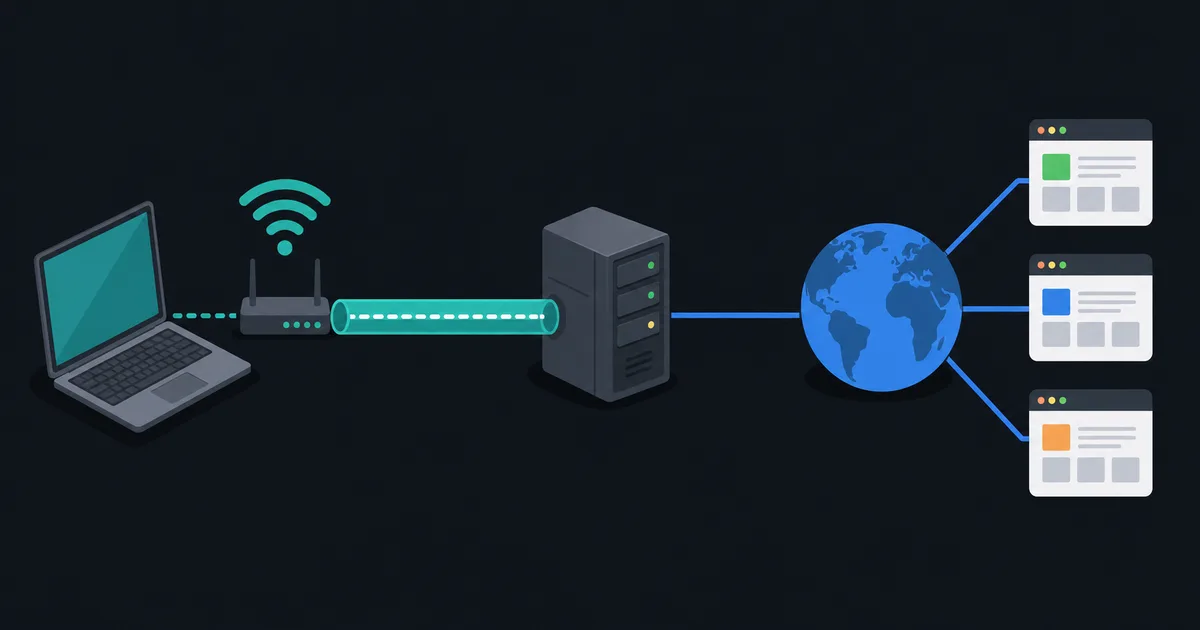
A VPN can route DNS requests through its tunnel or configure a particular resolver, depending on its client and settings. That may reduce exposure to the local network, but it does not remove the need to trust the VPN provider or resolver. It is one part of the wider network path described in How a VPN Works.
The takeaway
DNS translates human-friendly names into information applications can use, most often IP addresses. Recursive resolvers, authoritative servers, caches, and TTLs keep that system fast and scalable. Understanding the distinction between DNS, encrypted DNS, DNSSEC, and HTTPS makes privacy and troubleshooting claims much easier to evaluate.