The short answer
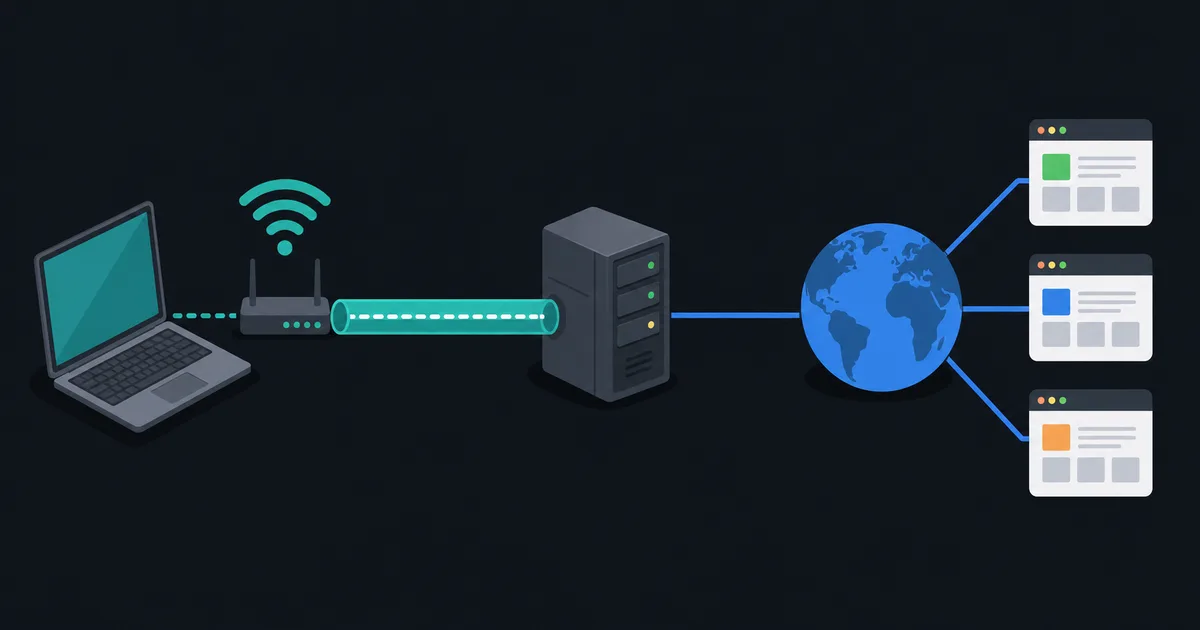
IKEv2/IPSec and OpenVPN are two ways to build an encrypted VPN connection, but they are not the same kind of technology. IKEv2 negotiates and maintains security associations for IPsec, while OpenVPN is a separate VPN protocol and software ecosystem that carries traffic through a TLS-based control channel and encrypted data channel.
Neither name alone guarantees better privacy, speed, or security. The provider's server setup, supported algorithms, client implementation, DNS and IPv6 handling, and the network you are using all matter. The useful question is usually which option works reliably on your devices and networks while meeting your security requirements.
What IKEv2 and IPsec do
IPsec is a set of standards for protecting IP traffic. It can provide confidentiality, integrity, authentication, and access control for packets. IKEv2, the Internet Key Exchange version 2 protocol, helps two endpoints authenticate each other and negotiate the keys and security associations IPsec uses.
In a consumer VPN app, "IKEv2/IPSec" normally describes a client-to-server VPN profile. IKEv2 handles setup, rekeying, and liveness information; IPsec protects the tunneled traffic. IKEv2 also includes NAT traversal mechanisms, which can help it work when a device is behind an ordinary home router.
What OpenVPN does
OpenVPN is an application-layer VPN protocol and open-source implementation. It commonly uses TLS for its control channel and can run its encrypted data channel over UDP or TCP. A provider decides which ports, ciphers, authentication methods, and profile options to offer.
Using TCP does not automatically make a VPN more secure, and using UDP does not automatically make it less reliable. UDP is commonly useful for real-time traffic and avoids some of the performance problems that can happen when a tunneled TCP connection carries other TCP traffic. TCP-based OpenVPN can still be useful where a network permits it and the provider supports it.
The practical differences
| Area | IKEv2/IPSec | OpenVPN |
|---|---|---|
| Protocol family | IKEv2 negotiates IPsec protection | A separate TLS-based VPN protocol |
| Device integration | Often available through operating-system VPN support | Usually uses an OpenVPN-compatible app or provider app |
| Network behavior | Commonly uses UDP 500 and 4500, including NAT traversal | Can use UDP or TCP and provider-selected ports |
| Mobility | Designed to support changing network addresses | Behavior depends on the client and connection setup |
| Interoperability | Standards-based, with implementation and policy differences | Broad client support, but profiles and options must match |
These are tendencies, not promises. A restrictive Wi-Fi network can block either option, and a well-maintained implementation of either protocol can be a reasonable choice.
Security depends on the configuration
It is misleading to rank protocols by name alone. Strong modern cryptography, correct certificate validation, secure authentication, regular updates, and a trustworthy service are more important than a simplistic "best protocol" label.
For example, a weakly configured VPN can undermine a strong protocol, while a carefully configured one can provide sound transport protection. A VPN also does not replace HTTPS, endpoint security, or account protection. See What Is a VPN and How Does It Actually Work? for the boundaries of VPN protection.
Firewalls, NAT, and restrictive networks
Both options must pass through the network between the device and VPN server. IKEv2/IPSec commonly uses UDP and can use NAT traversal when it detects address translation. OpenVPN may be easier to deploy on different provider-selected UDP or TCP ports, but that does not mean it will bypass every network policy.
Do not use a VPN protocol to evade rules you are not authorized to bypass. On a work, school, or managed network, the appropriate option may be to ask the network administrator which VPN methods are allowed.
Which should you choose?
Try IKEv2/IPSec when your provider supports it well on your device and you value native operating-system integration or reliable switching between Wi-Fi and mobile data. Try OpenVPN when your provider's supported profile works better on the network you use or when you need the flexibility of its client ecosystem.
Compare the actual connection rather than relying on generic speed claims. Test normal browsing, calls, streaming, reconnecting after a network change, and DNS behavior. What Is Latency? and What Causes Packet Loss? explain why performance varies from one route to another.
The takeaway
IKEv2/IPSec and OpenVPN are both established approaches to encrypted VPN connectivity. IKEv2 is the key-management component used with IPsec, while OpenVPN is a distinct VPN protocol. Choose based on support, configuration, network compatibility, and your practical needs—not a blanket claim that one is always faster or safer.