The short answer
A no-logs VPN is a service that says it does not keep records that can be used to reconstruct your online activity. In the strongest practical sense, that usually means it does not retain browsing destinations, DNS queries, the contents of traffic, or a history tying your VPN use to a particular source IP address.
The phrase is useful, but it is not a technical standard or a guarantee by itself. A provider can need some account, payment, support, or short-lived operational information to run a service. The important question is not only whether a page says “no logs,” but what information is collected, why, where it is stored, who can access it, and when it is deleted.
What “logs” can mean for a VPN
People use the word logs for several different kinds of records. Treating them as one thing can make a policy sound clearer than it is.
| Record type | What it can include | Why it matters |
|---|---|---|
| Activity data | Websites, IP destinations, DNS queries, or traffic content | Can reveal what a person did online |
| Connection data | Source IP, VPN server, connection timestamps, session duration, or transferred bytes | Can sometimes help link an account to a connection |
| Account data | Email address, subscription status, and payment-related records | Needed for account administration but still personal data |
| Support and diagnostics | A support ticket, crash report, or troubleshooting log | May contain identifying technical details if not handled carefully |
| Aggregated operations data | Service-wide capacity, error counts, or abuse trends | Can be useful without identifying an individual when genuinely aggregated |
A privacy-focused service can limit or avoid activity records while still processing a payment or responding to a support request. That does not automatically make its “no-logs” statement false, but the policy should make the boundary understandable.
What a meaningful no-logs policy should say
A useful policy is specific. It should name the categories of information the provider does and does not retain, rather than relying on broad promises such as “complete anonymity.” Look for clear answers to these questions:
- Does it retain browsing history, destination IP addresses, DNS queries, or traffic contents?
- Does it store a source IP address, exact connection timestamps, server choices, or bandwidth figures?
- Are diagnostic records created only when a user asks for help, and how long are they kept?
- What is the retention period for each category of data?
- Which companies process payments, hosting, support, or analytics data?
- Can a user request access to or deletion of account information?
Specific answers make a policy easier to compare and easier to challenge if a provider changes its practices. Vague wording leaves too much room for interpretation.
No logs does not mean no information at all
A commercial VPN normally needs a way to identify a subscription, process a payment, prevent fraud, and support customers. Those functions may involve account details or records held by payment providers. A service might also have limited, short-lived operational telemetry needed to keep servers available or investigate abuse.
Those records are not the same as a browsing-history database, but they still deserve scrutiny. The useful distinction is whether the information can be connected to an individual’s activity, whether it is necessary, and whether the retention period is limited. A provider should describe exceptions plainly instead of burying them in undefined terms.
For LibreGuard’s own statements about data handling, consult the current Privacy Policy. A privacy policy may change over time, so it is more reliable than a blog post for the service’s current commitments.
Audits, infrastructure, and trust
An independent audit can add evidence, especially when it identifies the systems, time period, and questions reviewed. It does not prove that a provider can never collect data, and it does not cover changes made after the audit. Read the scope, methodology, and findings rather than treating an “audited” badge as a complete answer.
Technical design matters too. A provider that stores less sensitive information has less information available to expose or disclose. But software design, access controls, server administration, incident response, legal obligations, and third-party vendors all affect the real outcome. No policy label removes the need to trust the operator at the point where VPN traffic leaves the tunnel.
Legal requests and third parties
A provider can receive legal requests even if it keeps minimal activity data. The relevant question is what records exist at the time, what jurisdiction applies, and how the provider handles requests. A transparent policy or transparency report can explain the process, but it should not promise a result that law or available records cannot support.
Third parties matter for the same reason. Payment processors, support platforms, app stores, and hosting providers may each handle different information under their own terms. A no-logs claim about VPN activity does not automatically describe every record outside the VPN server.
How to evaluate a no-logs VPN
Before choosing a service, read its privacy policy, terms, and support documentation together. Prefer precise language, short retention periods, and explanations that distinguish account operations from activity logging. Check whether the apps are maintained, whether security issues are addressed, and whether the provider explains DNS, IPv6, and kill-switch behavior clearly.
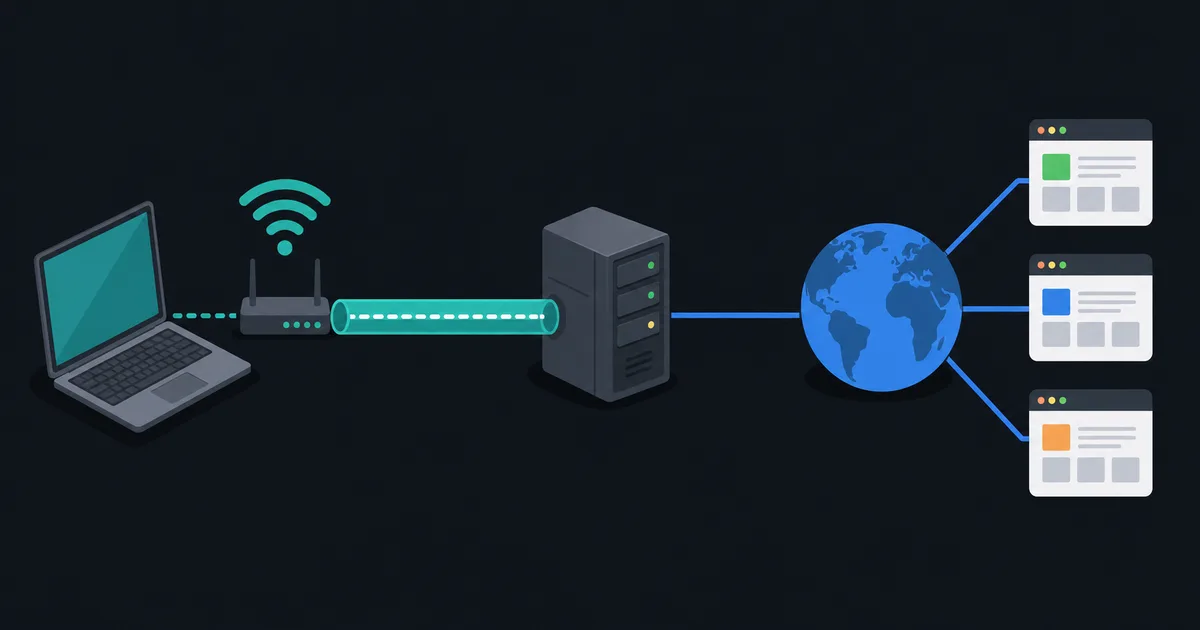
A VPN can encrypt traffic between your device and a VPN server and change the public IP address websites usually see. It cannot make a signed-in account anonymous, erase browser fingerprints, or replace HTTPS and device security. For the broader model, see What Is a VPN and How Does It Actually Work?.
The takeaway
A no-logs VPN is best understood as a claim about data practices, not a magic privacy switch. A credible policy identifies the records that are not retained, explains necessary operational data, sets retention limits, and makes the provider’s practices possible to evaluate. Read the details before relying on the label.