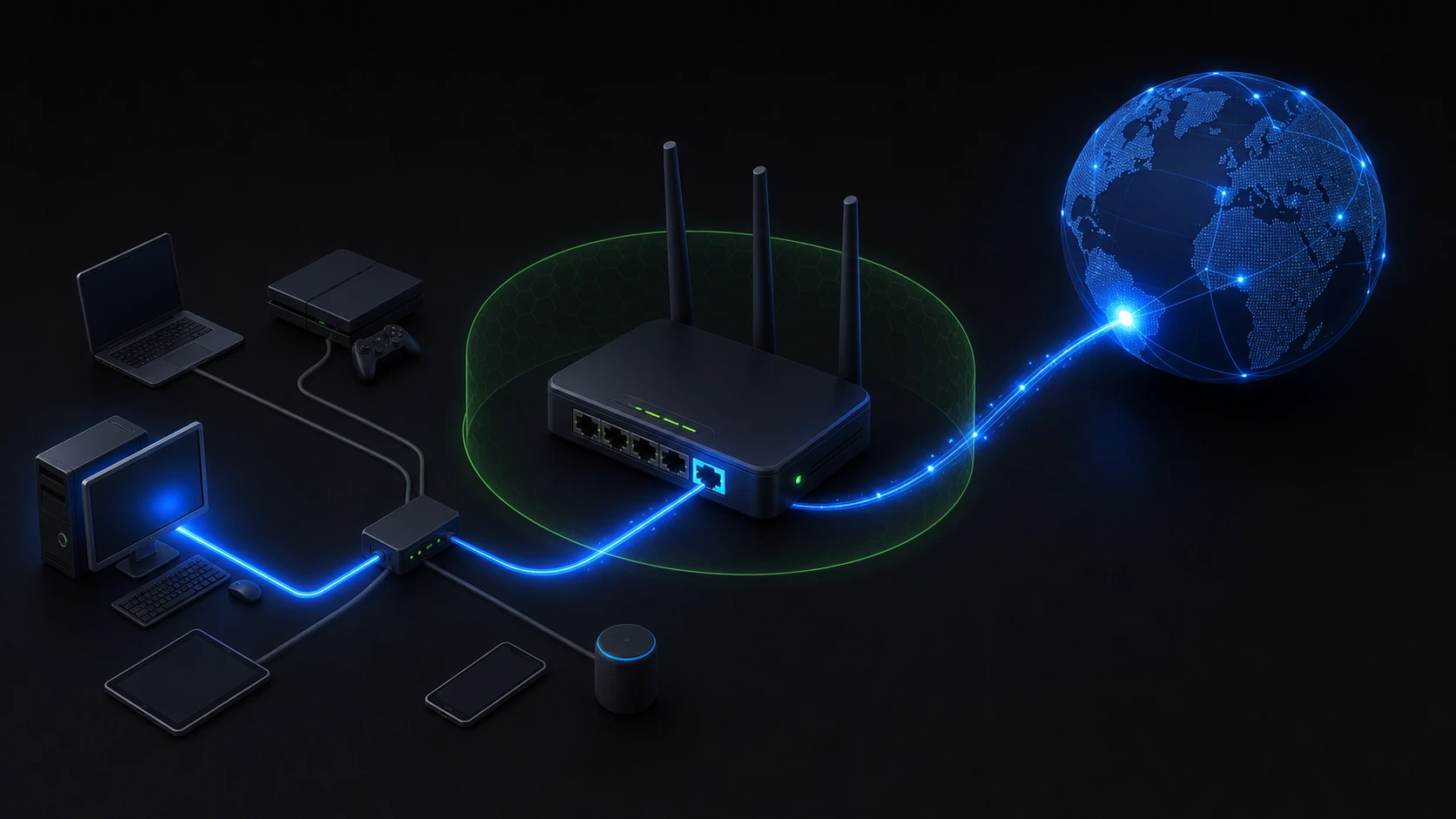
What Is Port Forwarding?
Learn what port forwarding is, how routers direct inbound traffic to a local device, why CGNAT can prevent it, and how to expose services more safely.
Read MorePage 3 of privacy, VPN, Linux, networking, and cybersecurity articles
Learn what port forwarding is, how routers direct inbound traffic to a local device, why CGNAT can prevent it, and how to expose services more safely.
Read MoreLearn how packets find a path across the internet, from your default gateway and routing table to prefixes, autonomous systems, BGP, and VPN routes.
Read MoreLearn what VPN split tunneling is, how app- and route-based rules work, when it is useful, the privacy tradeoffs, and how to choose a safer setup.
Read MoreA VPN kill switch blocks traffic if the VPN disconnects unexpectedly. Learn what it protects, how network locks differ, their limits, and how to test one.
Read MoreCompare IKEv2/IPSec and OpenVPN: how they work, their network behavior, security configuration, device support, and when each VPN protocol may fit.
Read MoreCompare WireGuard and OpenVPN: protocol design, transport behavior, configuration flexibility, device support, and realistic performance tradeoffs.
Read MoreCompare IKEv2/IPsec and WireGuard: how they connect, handle network changes, and what to consider for security, compatibility, routing, and reliability.
Read MoreAES-256 and ChaCha20 are modern encryption algorithms. Compare their designs, performance factors, secure modes, and why a cipher name alone is not enough.
Read MorePerfect forward secrecy uses temporary session keys to help protect earlier sessions if a long-term key is later exposed. Learn how PFS works and its limits.
Read More